

The history of Hof Malleghem
The long story behind Polderlicht
On the Bosstraat in Uitkerke lies a farmstead that has known many lives. It was a working farm, a place of horses and riders, and later a home for guests and art. Behind the white Polderlicht lies the history of Hof Malleghem: from old feudal names to the families who worked the land here, from the former riding arena to today's garden.
c. 1330
Old names in the polders
According to local historiography, Hof Malleghem is linked to a fief mentioned around 1330. The name Geraart de Rikelike appears in it, followed by his son Jan. The fief is described as one without sub-fiefs: land that had not in turn been granted out as smaller fiefs.
This is how the written story connected with Hof Malleghem begins. It leads back to a time when landholding, farming and feudal rights were closely intertwined. The date around 1330 belongs to that old mention; it is not the year the house you see today was built.
circa 1470–1480
A lord of Maldegem
The same local history names Philip, Lord of Maldegem, as holder of the fief in the years around 1470–1480. His name brings a noble chapter into the story of the farm.
A fief holder did not have to live on the land or work it himself. Daily life on a farm lay mainly in the hands of the people who worked there: they tended the animals, kept up the farmyard and brought in the harvest. So besides a history of names, Hof Malleghem also has a history of labour.
Residents, owners and farming families
In later history, Jan Louis Peellaert, Lord of Westhove, Joannes Claeys and the Van Outryve-d’Ydewalle family are connected with the farm. Joannes Claeys is named as resident and headman.
After that the tenants and farmers come more clearly into view. Around 1800 Emanuel Vanhoutte is recorded as tenant. Joannes Vanhoutte follows in the list of farmers and remains connected with the farm until 1862.
Anna Constant continues running the farm from 1862 to 1864. From 1864 she is named together with Corneel Muysen, until 1881. These names bring the story closer to daily life: not only who owned the land, but also who kept the farm going here.
The farmstead on old maps
Maps, too, preserve the past of this place. The Ferraris map from the 1770s shows elongated buildings on this side of the road that appear to match the later farmstead. In the nineteenth century it becomes easier to recognise.
The Atlas der Buurtwegen from around 1840 shows an elongated farm complex west of the road, marked as Chemin No 10. On the Popp map, from the 1842–1879 map series, plot 681 in section B appears by the farm. That number still echoes in today's address plot 681E.
In this way the maps show how the farm stood out in the landscape: a long farmyard along the road, with farmland around it. Anyone arriving today sees a new interpretation of a familiar shape.
1891–1910
The Sanders farm
From 1891 to 1910 the farm is run by Carolus Ludovicus Sanders, also called Charles Ludovicus. For that period, local history records a farm of 28.44 hectares.
This refers to the size of the farm business at the time, including the land farmed with it. The farmyard on the Bosstraat was the centre of a much wider working area. Behind the living quarters lay the stables, barns and the land on which the farm's livelihood depended.
from 1910
The Hautekiet family
From 1910 the name Hautekiet appears, with Charles-Louis Hautekiet as farmer. In the next generation Désiré Hautekiet takes over the work on the farm.
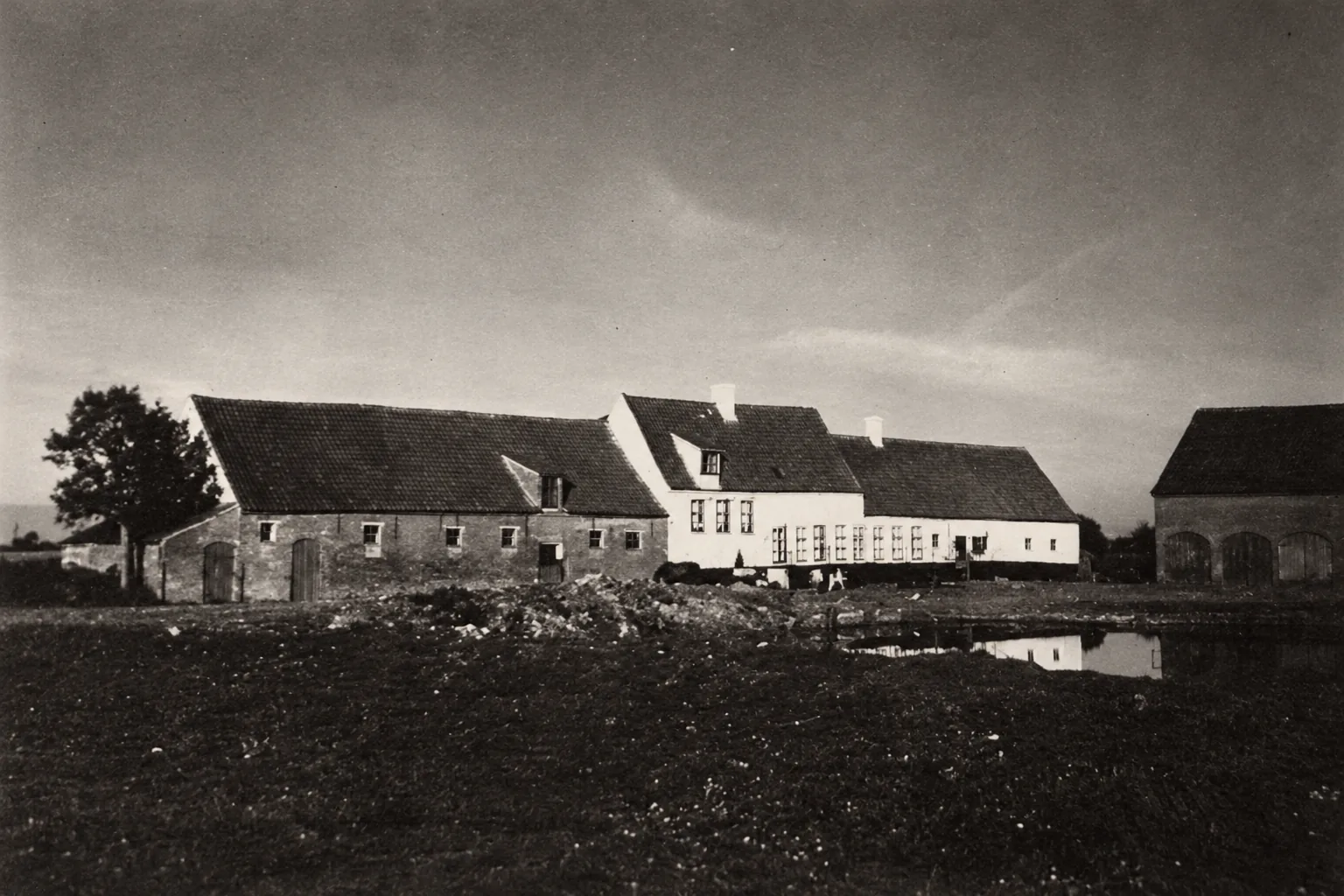
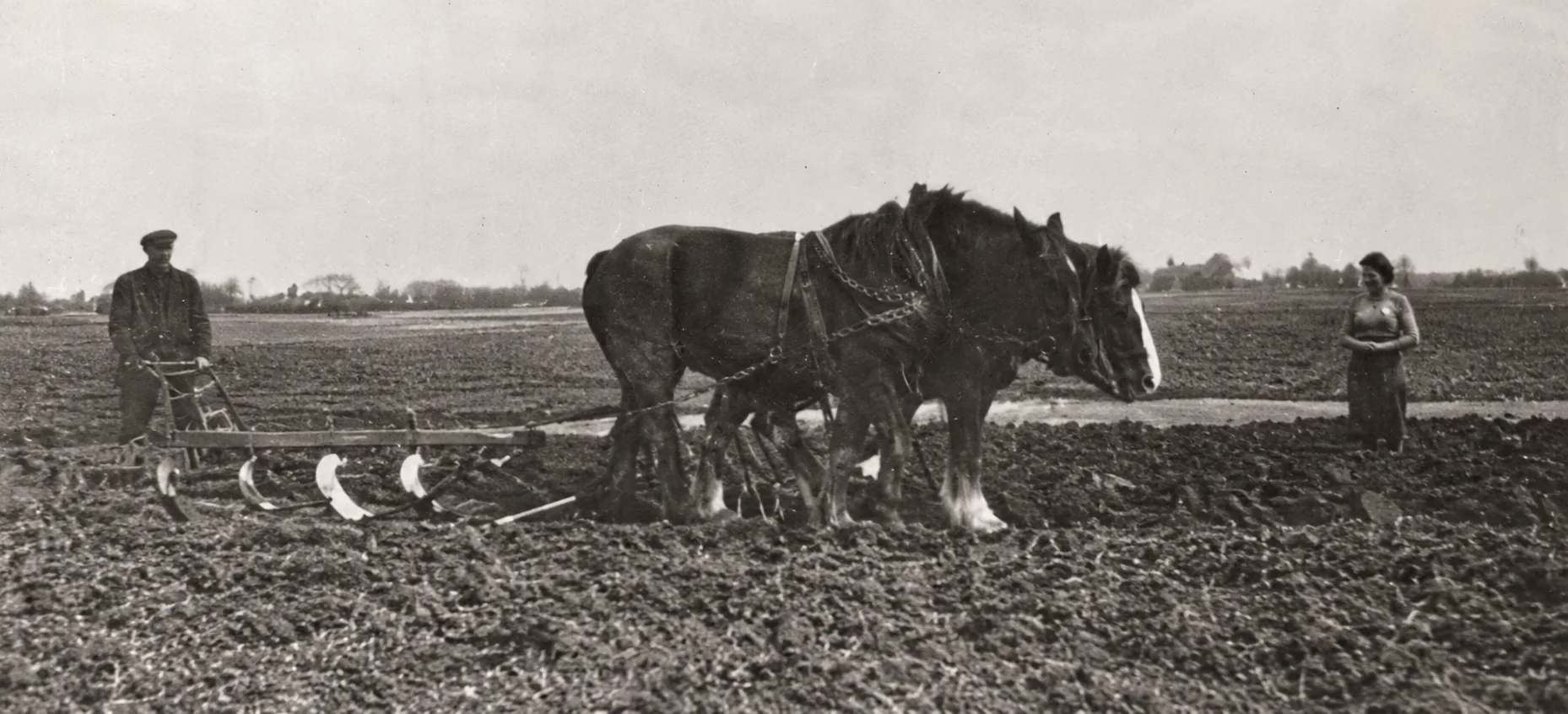
Images from that period have been preserved that make the past tangible. An overview photo from 1952 shows the farmyard and its buildings. A photo from 1956 shows Désiré with the draught horses Vos and Jolie. They recall the time when horses had a place in the daily work on the land.
These photos give the history a face. You see not only a building, but also the people and animals who made the farm a living place.
1965–1975
Horses give the farmstead a new rhythm
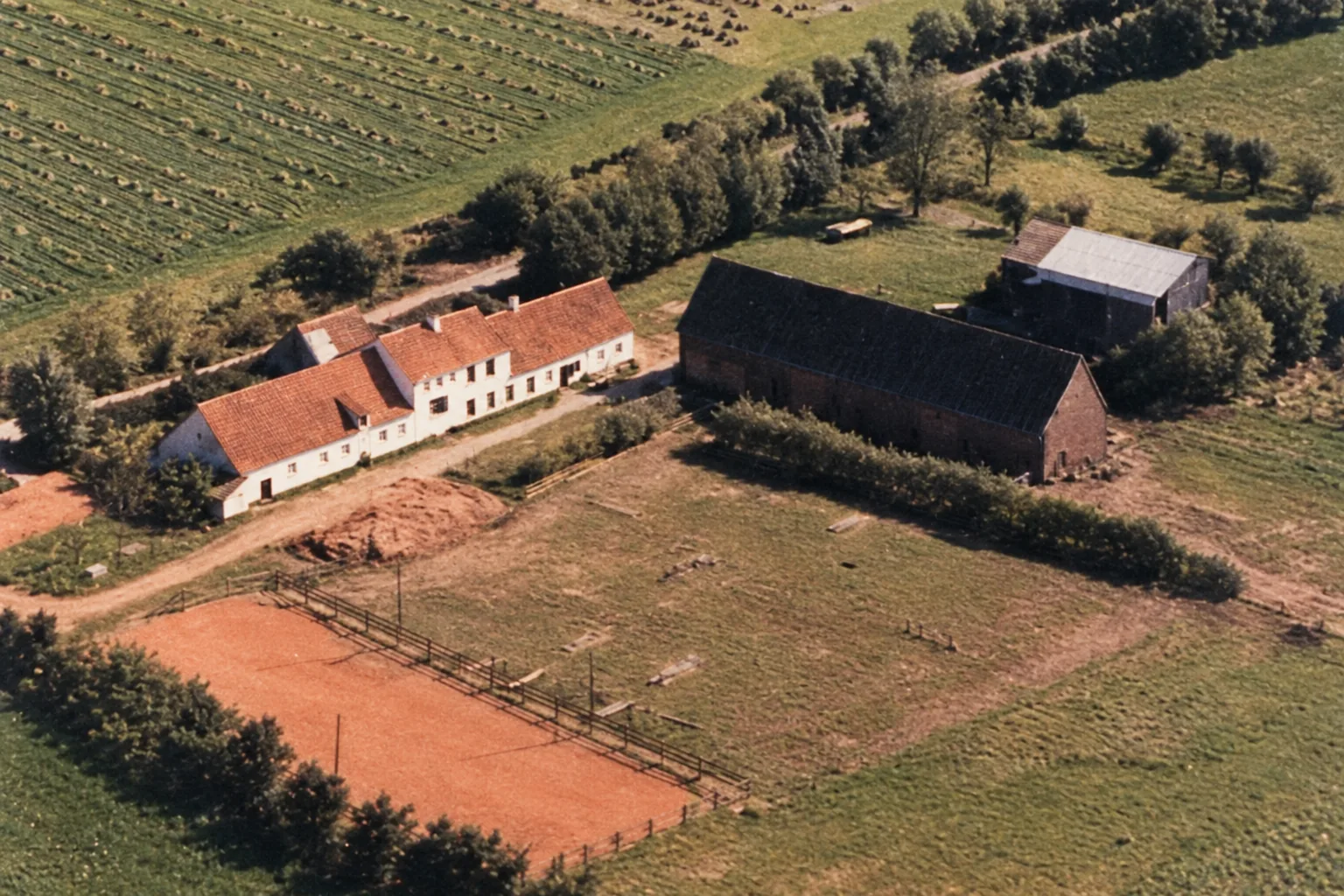
In 1965 Roger Hautekiet takes over the farm. An aerial photo from 1967 shows the rear yard, the barns and the surrounding fields. It is a view of the farm before the later changes.
In 1975 the riding school is expanded further, with horse stables and a riding arena. Horses remain part of the farmstead but take on a different role: alongside its farming past, a place for riders and equestrian sport grows.
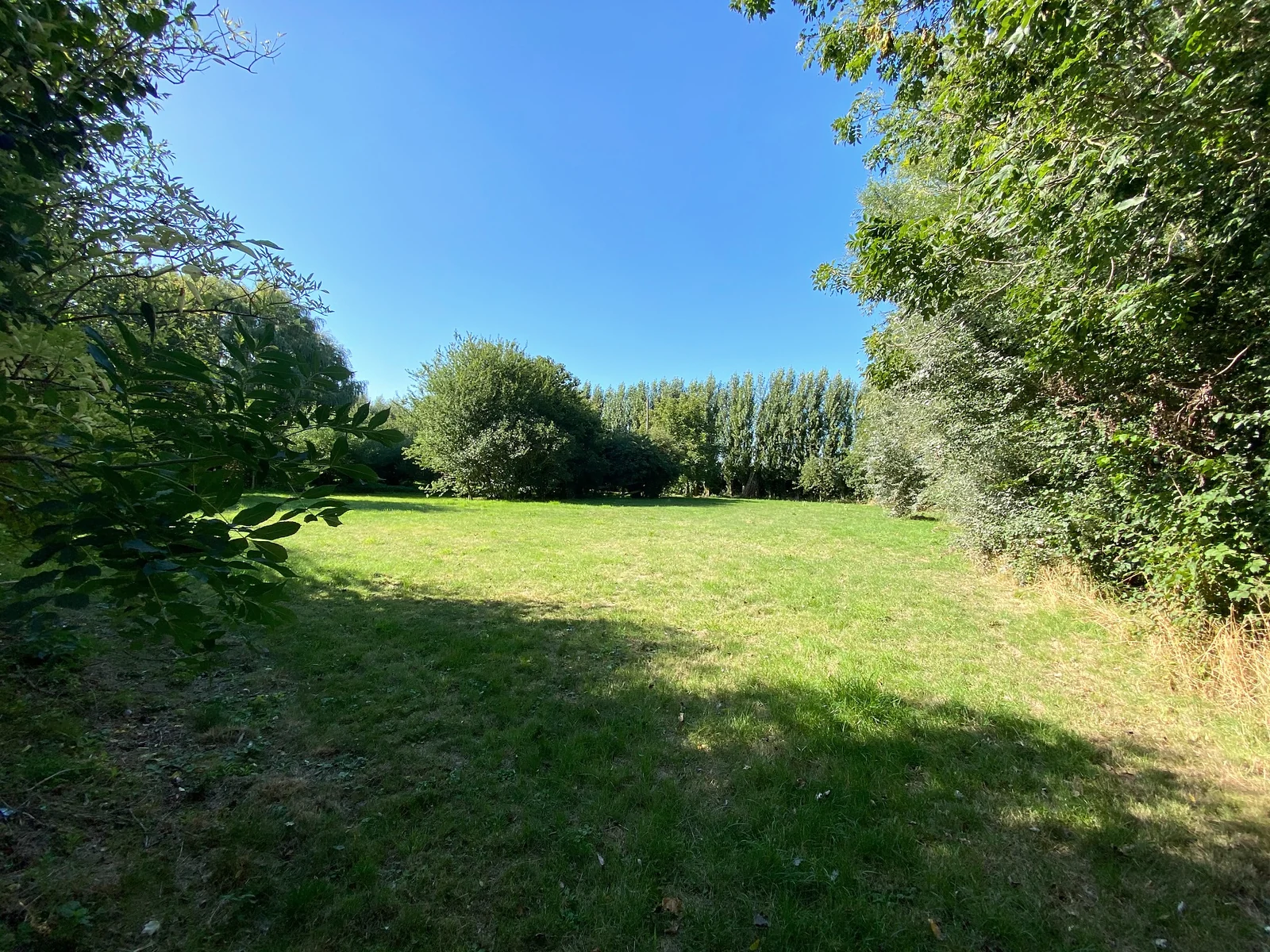
The former riding arena lies where Polderlicht's large garden is today. On the right side of the garden its shape is still recognisable. Where people once rode, the grass now invites you to walk, read or simply sit for a while.
1985
A turning point
In 1985 a storm destroys the barn. That same year Roger Hautekiet leaves and starts Manege Vagevuur in Zuienkerke. For Hof Malleghem an important chapter comes to an end.
The farm is sold to the owners of Hotel Saint-Sauveur in Blankenberge. The farmstead faces a new period, with a different purpose ahead.
2004
Room for a new life
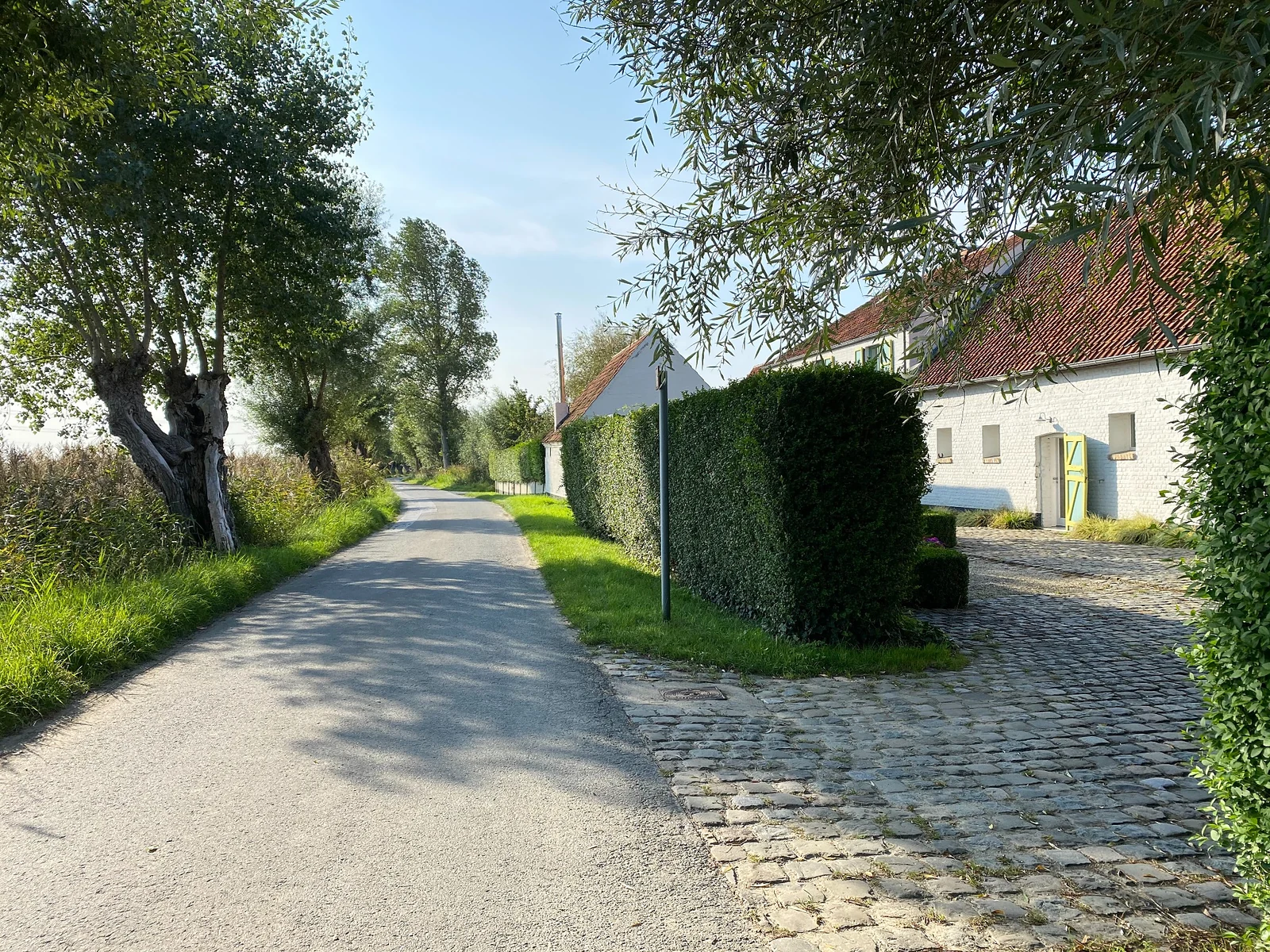
In 2004 the old farmhouse is given a contemporary interpretation in a renovation by the architects BURO II. Light, space and warm materials give the house a new character, while the thick walls and rural shape remain part of the place.
The former main house and the stable wing take on a new role. The farming past does not disappear from view: it can still be felt in the elongated building form, the relationship between house and yard, and the open space around it.
from 2008
From farm to guesthouse
In 2008 the chapter of B&B Het Polderlicht begins, run by Carine De Meester. Today the place is called Guesthouse Polderlicht. Carine welcomes guests here and has her painting studio here.
Where work on the land once set the pace of the day, there is now room to slow down. The rooms look out over the surroundings, the garden is a place to linger and art is part of the house.
Here the past does not need to be kept behind glass. It lives in the shape of the farmstead, in the old photos, in the memory of the riding arena and in the names of the people who built their lives here.
An old farmstead, lived in again and again.
Over the centuries Hof Malleghem changed hands and purpose. The farm became a riding school and later a guesthouse. Today Carine adds her own chapter: a house for hospitality, art and calm, in the heart of the polders.
Timeline
- c. 1330First mention in local historiography: Geraart de Rikelike
- circa 1470–1480Philip, Lord of Maldegem, as fief holder
- around 1800Emanuel Vanhoutte as tenant
- 1862–1881Anna Constant, from 1864 with Corneel Muysen
- 1891–1910Carolus Ludovicus Sanders runs the farm
- from 1910Charles-Louis Hautekiet, then Désiré Hautekiet
- 1952Overview photo of the farmstead
- 1956Désiré with the draught horses Vos and Jolie
- 1965Roger Hautekiet takes over the farm
- 1967Aerial photo of the rear yard
- 1975The riding school is expanded
- 1985A storm destroys the barn; the farm is sold
- 2004Renovation by the architects BURO II
- 2008Start of B&B Het Polderlicht
- todayGuesthouse Polderlicht, Carine's home